
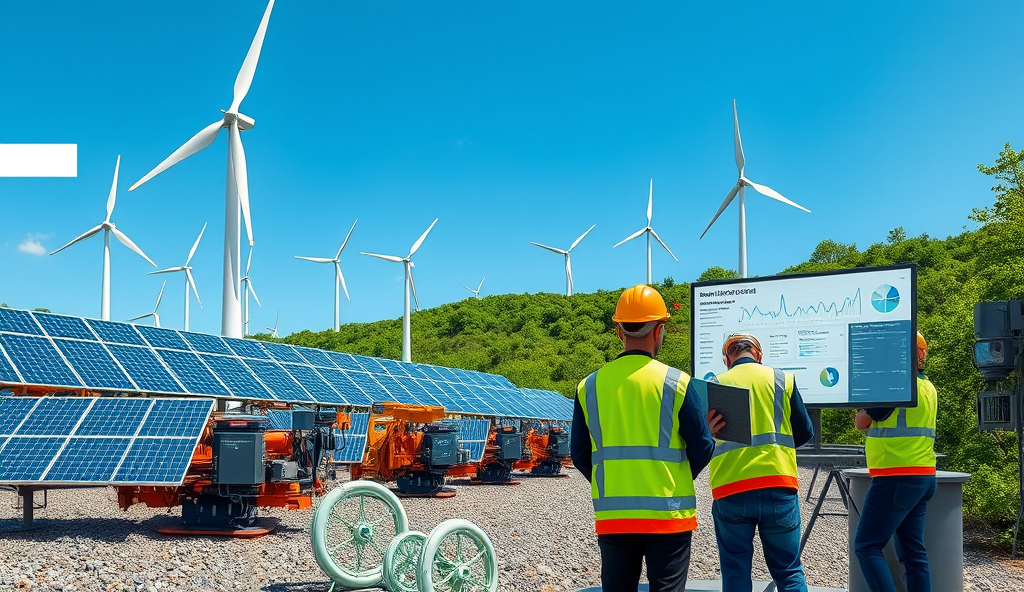

Introduction to Renewable Energy in Mining Operations
The mining sector’s shift toward renewable energy integration marks a pivotal transformation in sustainable mining practices analysis, driven by both environmental imperatives and economic benefits. Leading operations like Chile’s Escondida copper mine now generate 50% of their energy from solar and wind, cutting costs by 20% while reducing carbon emissions.
Renewable energy in mining operations addresses two critical challenges: volatile fossil fuel prices and remote site power accessibility. Australia’s Agnew Gold Mine demonstrates this through its hybrid microgrid combining wind, solar, and battery storage to achieve 60% renewable penetration.
This transition lays the foundation for examining renewable energy’s role in achieving truly sustainable mining, where environmental stewardship aligns with operational efficiency. The following section will explore why these solutions are becoming indispensable for the industry’s future.
Key Statistics
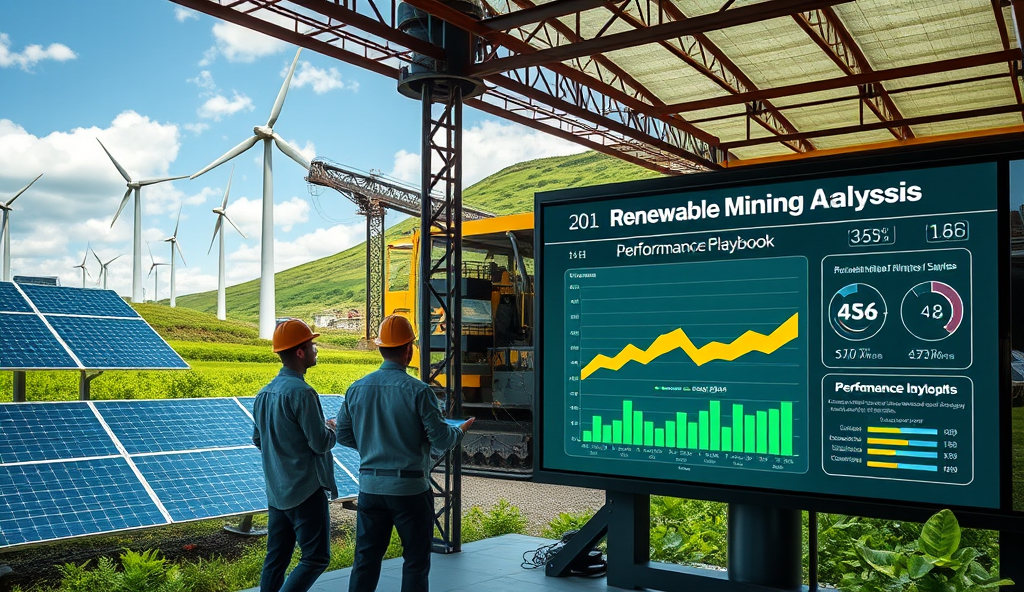
The Importance of Renewable Energy for Sustainable Mining
Leading operations like Chile's Escondida copper mine now generate 50% of their energy from solar and wind cutting costs by 20% while reducing carbon emissions.
Renewable energy has become a cornerstone of sustainable mining practices analysis, offering both environmental and operational advantages that align with global decarbonization goals. Projects like BHP’s Queensland coal mines, which now source 50% renewable electricity through solar farms and power purchase agreements, demonstrate how clean energy directly reduces Scope 2 emissions while stabilizing long-term energy budgets.
Beyond emissions reduction, renewable energy integration in mining operations enhances energy security for remote sites traditionally dependent on expensive diesel generators. Barrick Gold’s Kibali mine in Africa achieved 81% renewable penetration through hydro-solar hybrids, proving renewable systems can deliver reliable power even in challenging locations while cutting fuel costs by 40%.
These successes underscore why renewable solutions are transitioning from optional pilots to essential components of mining sustainability metrics analysis. The next section will examine the specific technologies enabling this transformation across different mining environments and operational scales.
Key Renewable Energy Solutions for Mining Operations
Barrick Gold's Kibali mine in Africa achieved 81% renewable penetration through hydro-solar hybrids proving renewable systems can deliver reliable power even in challenging locations while cutting fuel costs by 40%.
Building on the operational successes highlighted earlier, mining operators now deploy three primary renewable solutions that deliver both sustainability metrics analysis improvements and cost efficiencies. Solar photovoltaic systems dominate new installations due to rapidly declining costs, with Chile’s Escondida copper mine operating a 115MW solar plant that supplies 100% daytime power needs while reducing annual CO2 emissions by 300,000 tons.
Wind energy complements solar in regions with consistent wind patterns, exemplified by Glencore’s Raglan Mine in Canada where four wind turbines provide 10% of site electricity while cutting diesel consumption by 2.5 million liters annually. Hybrid systems combining solar, wind, and battery storage are proving particularly effective for 24/7 operations, as seen at Rio Tinto’s Weipa bauxite mine where renewables meet 65% of energy demand through intelligent load management.
These technology combinations form the foundation for modern mining sustainability metrics analysis, with each solution offering distinct advantages based on geographic and operational parameters. The following section will explore solar power integration in greater depth, examining site-specific implementation strategies that maximize both energy output and equipment compatibility.
Solar Power Integration in Mining Sites
Hybrid systems combining solar wind and battery storage are proving particularly effective for 24/7 operations as seen at Rio Tinto's Weipa bauxite mine where renewables meet 65% of energy demand through intelligent load management.
Mining operations increasingly adopt solar photovoltaic systems due to their scalability and compatibility with remote locations, as demonstrated by BHP’s Spence copper mine in Chile where a 100MW solar plant reduced energy costs by 20% while eliminating 300,000 tons of CO2 annually. Site selection prioritizes high solar irradiance areas with minimal dust interference, requiring advanced panel cleaning systems like those deployed at Sandfire Resources’ DeGrussa mine in Australia.
Hybrid configurations combining solar with battery storage prove essential for continuous operations, exemplified by Gold Fields’ Agnew gold mine where a 10.6MW solar array paired with 13MW/4MWh storage delivers 50-60% renewable penetration. These systems integrate smart load management to prioritize critical processes during peak demand periods while maintaining grid stability through predictive energy forecasting.
The modular nature of solar installations allows phased implementation, enabling mines like Antofagasta’s Los Pelambres to expand capacity incrementally while monitoring sustainability metrics analysis improvements. This flexibility makes solar particularly valuable for operations transitioning from diesel dependence, setting the stage for complementary wind energy applications in mixed-resource environments.
Wind Energy Applications in Mining
The 89% cost reduction in lithium-ion storage since 2010 translates to 5-7 year payback periods for solar-battery hybrid systems at mines like Chile’s Escondida where renewable integration cut energy costs by 40% while maintaining 99.9% reliability.
Complementing solar solutions, wind energy offers reliable power generation for mines in high-wind regions, with Rio Tinto’s Diavik diamond mine in Canada achieving 50% renewable penetration through an 8.9MW wind farm. Turbine placement leverages existing mine infrastructure like tailings dams or cleared land, reducing installation costs while optimizing wind capture efficiency.
Advanced forecasting systems mitigate intermittency challenges, as seen at Glencore’s Raglan nickel mine where 3MW of wind capacity integrates with diesel hybrids, cutting fuel consumption by 4 million liters annually. Modular turbine designs enable scalable deployment, mirroring the phased approach of solar-battery systems discussed earlier.
For mines transitioning from fossil fuels, wind-solar hybrids maximize renewable output across seasons, preparing operations for further integration of hydropower and geothermal solutions in diverse terrains. This multi-resource strategy enhances energy resilience while advancing sustainable mining practices analysis.
Hydropower and Geothermal Options for Remote Mines
Emerging technologies like green hydrogen and advanced battery storage are set to revolutionize renewable energy integration in mining with Fortescue Metals Group piloting a 150MW hydrogen electrolyzer project in Australia.
Building on wind-solar hybrid systems, hydropower provides baseload capacity for mines near rivers, with Barrick Gold’s Kibali operation in Congo generating 81% of its power from three hydropower plants. Geothermal systems offer 24/7 renewable energy in volcanic regions, exemplified by KenGen’s 35MW Olkaria plant supporting Kenya’s fluorspar mining sector.
Micro-hydropower projects below 10MW capacity prove viable for smaller mines, like Newcrest’s Cadia Valley operations in Australia supplementing 15% of energy needs through water recycling systems. Geothermal binary plants now operate at temperatures as low as 85°C, expanding deployment potential beyond traditional high-enthalpy fields for sustainable mining practices analysis.
These solutions integrate seamlessly with the energy storage solutions discussed next, creating resilient hybrid systems that reduce reliance on diesel generators in off-grid locations. Their predictable output profiles complement intermittent renewables while meeting mining operations’ rigorous power quality requirements.
Energy Storage Solutions for Consistent Power Supply
Modern mining operations leverage advanced battery storage to stabilize intermittent renewable output, with lithium-ion systems now achieving 90% round-trip efficiency at sites like BHP’s Nickel West project in Australia. Flow batteries provide 10+ hour discharge durations for hybrid microgrids, as demonstrated by Energy Vault’s 5MW/15MWh system supporting South African platinum mines.
Thermal storage solutions like molten salt tanks integrate effectively with concentrated solar power, storing excess energy for night shifts at copper mines in Chile’s Atacama Desert. Compressed air energy storage offers 30-year lifespans for large-scale applications, complementing the hydropower and geothermal baseload capacity discussed earlier while reducing diesel backup needs.
These storage technologies enable mines to maintain 99.9% power reliability while cutting emissions, creating a bridge to the cost-benefit analysis of renewable integration in the following section. Their declining costs—lithium-ion prices dropped 89% since 2010—make them increasingly viable for sustainable mining practices analysis across diverse operational scales.
Cost-Benefit Analysis of Renewable Energy in Mining
The 89% cost reduction in lithium-ion storage since 2010 translates to 5-7 year payback periods for solar-battery hybrid systems at mines like Chile’s Escondida, where renewable integration cut energy costs by 40% while maintaining 99.9% reliability. Geothermal-powered operations in Indonesia demonstrate 30% lower lifetime costs compared to diesel, with carbon credits adding $2-5M annual revenue streams at scale.
Lifecycle assessments reveal wind-solar hybrids reduce mining sector carbon footprints by 60-80%, offsetting higher upfront costs through fuel savings exceeding $20M annually at large copper mines. The Atacama Desert’s CSP-molten salt projects achieve $0.05/kWh levelized costs, outperforming fossil alternatives when factoring in avoided diesel transportation expenses to remote sites.
These economic advantages set the stage for examining real-world implementations, as demonstrated by the case studies of successful renewable mining projects covered next. Operational data from Australia’s Agnew gold mine shows hybrid microgrids delivering 11% IRR through optimized renewable-storage combinations.
Case Studies of Successful Renewable Mining Projects
Building on the economic advantages highlighted earlier, Chile’s Escondida copper mine exemplifies solar-battery hybrid success, with its 110MW PV plant and 4.5MW/11MWh storage system reducing energy costs by 40% while achieving 99.9% uptime. Similarly, Indonesia’s Sorik Marapi geothermal project powers gold mining operations with 30% lifetime cost savings versus diesel, leveraging carbon credits for additional revenue.
Australia’s Agnew gold mine demonstrates optimized renewable-storage integration, combining 18MW wind, 4MW solar, and 13MW/4MWh battery storage to deliver an 11% IRR while cutting emissions by 50%. The Atacama Desert’s CSP-molten salt installations further validate renewable mining viability, achieving $0.05/kWh costs by eliminating diesel transport to remote sites.
These projects prove renewable energy in mining operations can balance sustainability and profitability, though implementation challenges remain. The next section explores these hurdles and their solutions, from grid stability to financing models.
Challenges and Solutions in Adopting Renewable Energy
Despite proven success cases like Escondida and Agnew, mining operations face technical hurdles such as intermittent renewable supply and grid instability, with remote sites experiencing 20-30% energy fluctuations without proper storage. Hybrid systems combining solar-wind-battery storage, as seen in Australia’s DeGrussa copper mine, mitigate this by ensuring 85% renewable penetration while maintaining reliability.
Financing remains a barrier, with upfront costs for renewable infrastructure 30-50% higher than diesel setups, though Chile’s tax incentives for solar adoption reduced payback periods to under 5 years. Innovative power purchase agreements (PPAs), like those used in Ghana’s solar-powered gold mines, enable third-party funding while locking in long-term energy savings.
Regulatory uncertainty and land-use conflicts delay projects, but Peru’s streamlined permitting for hybrid systems cut approval timelines by 40%. These solutions pave the way for government policies to further accelerate adoption, as explored next.
Government Policies and Incentives for Renewable Mining
Building on Peru’s permitting reforms and Chile’s tax incentives, governments globally are introducing tailored policies to accelerate renewable energy adoption in mining. Canada’s Clean Energy for Rural and Remote Communities program offers 50% funding for hybrid systems, while Australia’s Renewable Energy Target provides certificates worth $30/MWh for mining projects exceeding 30% clean energy use.
These policies address the 30-50% cost gap highlighted earlier by combining capital subsidies with operational incentives. South Africa’s Renewable Energy IPP Procurement Program has enabled 400MW of mining-linked projects since 2020, demonstrating how structured tenders can mobilize private investment while meeting sustainability metrics analysis targets.
Such frameworks create predictable conditions for operators transitioning to renewable energy in mining operations, setting the stage for practical implementation steps. As regulations mature, mines can leverage these mechanisms to achieve both economic and environmental objectives through standardized renewable integration pathways.
Steps to Implement Renewable Energy in Your Mining Operation
Leveraging the policy frameworks discussed earlier, begin by conducting a site-specific renewable energy feasibility study, analyzing solar/wind potential using tools like NASA’s POWER dataset, which has helped Chilean copper mines achieve 40% solar penetration. Partner with local utilities to navigate grid connection protocols, as seen in Canada’s Diavik mine hybrid system that reduced diesel use by 65%.
Next, structure procurement through competitive tenders like South Africa’s REIPPP, ensuring technology alignment with your load profile—BHP’s Escondida solar plant demonstrates how 110MW systems can meet 100% daytime demand. Secure financing by combining government incentives (like Australia’s $30/MWh certificates) with power purchase agreements to offset the 30-50% cost gap identified in previous sections.
Finally, phase implementation starting with non-critical loads, as Barrick Gold did at its Zambian operations, achieving 20% renewable integration within 18 months. This staged approach prepares operations for the subsequent monitoring and optimization phase while mitigating technical risks through real-world performance data collection.
Monitoring and Optimizing Renewable Energy Systems
After implementing renewable energy systems as outlined in previous phases, continuous monitoring becomes critical—Rio Tinto’s Weipa bauxite mine uses AI-powered analytics to optimize its 6.7MW solar farm, achieving 85% system efficiency. Real-time performance tracking helps identify underperforming components, as seen at Chile’s Collahuasi mine where sensor data improved wind turbine output by 12%.
Integrate SCADA systems with existing mining operations to balance renewable supply and demand fluctuations, mirroring Glencore’s Raglan Mine hybrid setup that maintains 90% renewable penetration. Predictive maintenance algorithms, like those deployed at BHP’s Olympic Dam, reduce downtime by 30% while extending equipment lifespan.
These optimization strategies create a foundation for exploring future trends in renewable energy for the mining industry, where emerging technologies will further enhance system performance. Data-driven refinements ensure operations remain aligned with both economic and sustainability targets established earlier in the implementation process.
Future Trends in Renewable Energy for the Mining Industry
Emerging technologies like green hydrogen and advanced battery storage are set to revolutionize renewable energy integration in mining, with Fortescue Metals Group piloting a 150MW hydrogen electrolyzer project in Australia. Modular microgrid solutions, such as those tested by Barrick Gold in Nevada, will enable faster deployment of hybrid systems in remote mining locations while reducing infrastructure costs by up to 40%.
Next-generation AI will enhance predictive capabilities beyond current SCADA systems, leveraging quantum computing for real-time energy optimization across global mining networks. Companies like Anglo American are already testing self-learning algorithms at their Mogalakwena platinum mine, achieving 95% renewable utilization during peak production cycles.
These innovations will further align mining operations with sustainability metrics analysis, creating a seamless transition toward fully decarbonized extraction processes. The industry’s progress in renewable energy integration now sets the stage for evaluating long-term strategic pathways in the concluding analysis.
Conclusion: The Path Forward for Renewable Mining Analysis
The mining industry stands at a critical juncture where renewable energy integration is no longer optional but essential for long-term viability, as demonstrated by Chile’s successful solar-powered copper mines reducing energy costs by 40%. With technologies like hydrogen-powered haul trucks and AI-driven energy management systems maturing rapidly, operators must prioritize scalable solutions tailored to their specific geographies and ore types.
Lifecycle assessments now clearly show renewable-powered mines achieve 60-75% lower carbon footprints while maintaining profitability, as seen in Australia’s hybrid wind-diesel iron ore operations. However, successful implementation requires addressing intermittency challenges through battery storage innovations and grid integration strategies discussed throughout this analysis.
Forward-thinking companies should establish cross-functional renewable transition teams to evaluate the ROI of specific technologies against their operational profiles. The coming decade will separate industry leaders from laggards based on who embraces this transformation earliest, with regulatory pressures and investor expectations accelerating the shift toward sustainable mining practices.
Frequently Asked Questions
How can mining operations assess renewable energy feasibility for remote sites?
Use NASA's POWER dataset for solar/wind potential analysis and conduct microgrid modeling with tools like HOMER Pro to evaluate hybrid system configurations.
What financing options exist for renewable energy projects in mining?
Leverage government incentives like Australia's Renewable Energy Target certificates and structure power purchase agreements (PPAs) with third-party developers to reduce upfront costs.
How do hybrid renewable systems maintain reliability during intermittent generation?
Combine lithium-ion batteries (90% efficiency) with predictive load management systems like those used at Rio Tinto's Weipa mine to ensure 99.9% uptime.
What are the key metrics for tracking renewable energy performance in mining?
Monitor Levelized Cost of Energy (LCOE) diesel displacement rates and carbon reduction using platforms like Schneider Electric's EcoStruxure for real-time analytics.
Can existing mining infrastructure support large-scale renewable integration?
Yes repurpose tailings dams for wind farms and use cleared land for solar arrays as demonstrated at Glencore's Raglan Mine achieving 10% wind penetration.