
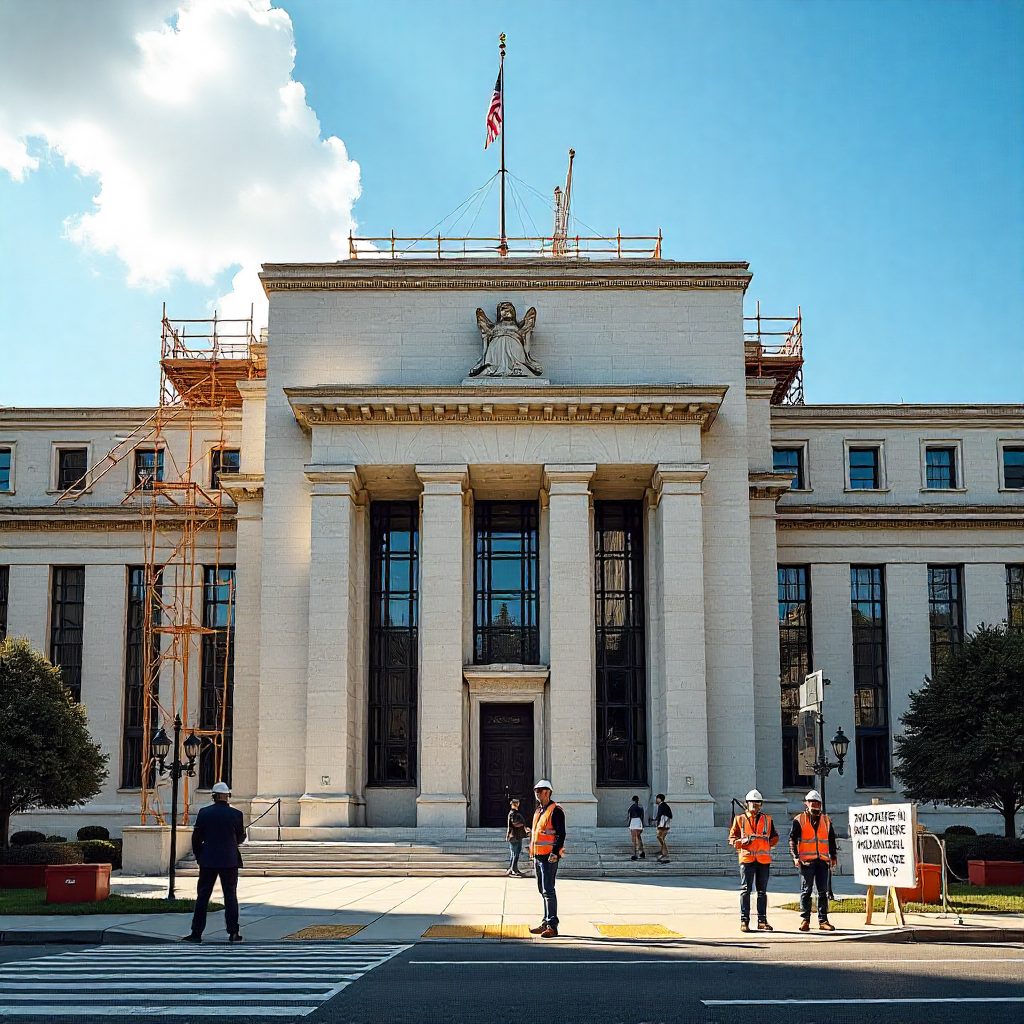

The Federal Reserve’s $2.5 billion renovation of its historic Washington, D.C. headquarters has drawn intense public scrutiny and ignited debates across political, economic, and institutional lines. This controversy has become more than a matter of construction costs—it now highlights questions of government accountability, institutional transparency, and the future of central banking, especially around a potential central bank digital currency (CBDC).
This expanded article dives deeper into the full extent of the renovation project: its background, architecture, engineering considerations, public criticisms, the Fed’s response, taxpayer implications, global context, expert analysis, and what this means for the future of money. The keyphrase Federal Reserve renovation appears throughout this narrative to maintain clarity and SEO optimization.
Background: The Fed’s Mission and the Need for Renovation
The Federal Reserve was born in 1913 to stabilize the U.S. financial system. It manages monetary policy, supervises banks, maintains financial stability, and supports payment systems. The Marriner S. Eccles Building, commissioned in 1937, has long stood as a symbol of central banking authority and now faces the wear of time and evolving operational demands.
In recent decades, technology has advanced rapidly. While the Eccles Building retains its architectural heritage, its systems lag behind modern standards. Electrical wiring, HVAC, fire suppression, access control, and digital security systems have aged beyond efficient repair. Renovation became not just ideal but essential. However, the current Federal Reserve renovation has amplified the tension between preserving history and adapting for the future.
Scope and Objectives of the Renovation
The project covers two adjacent structures: the Marriner S. Eccles Building and the Constitution Avenue building. Its goal is to:
Upgrade life safety systems, including modern fire suppression and evacuation routes. Retrofit structural components to meet seismic and building code requirements. Remove hazardous materials like asbestos and lead-based paints. Modernize HVAC, plumbing, electrical, and data infrastructure. Enhance digital security features protecting internal operations and data. Improve physical access and ADA compliance. Preserve and restore historic architectural elements like marble features and sculptures.
Behind these objectives lies a broader strategy: consolidating operations, retiring leased offices, and enhancing long-term efficiency. While the 2018 budget estimate was $1.9 billion, delays and added complexities pushed costs to the current estimate of $2.5 billion. Factors include discovering hazardous materials during demolition, rising labor/material costs, and intricate preservation work in sensitive zones.
Architectural, Engineering, and Historic Preservation Challenges
Historic preservation demands meticulous care. Every beam, wall, and landmark must meet preservation standards while being retrofitted with new systems. Workers often encounter unexpected conditions behind century‑old walls, requiring significant reworking of plans. For example, termite-damaged beams required full replacement instead of refurbishment.
Further, removing asbestos and lead without contaminating occupied spaces adds cost and complexity. Specialized contractors must isolate and seal entire building zones during removal. HVAC systems must deliver modern climate control without changing interior aesthetics.
Modernizing digital infrastructure involves installing secure server rooms, upgraded fiber paths, and biometric access that fit within existing layouts. Integrating these systems into historic structures is a time-consuming, costly process that unexpectedly inflates project estimates.
Public Scrutiny, Political Fallout, and Institutional Image
The renovation has become a symbol of something larger than concrete and wiring. Public reaction focused on three main concerns.
First, the scale of the spending during a time of economic pressure—risen housing costs, inflation, student debt—raised eyebrows. While the Fed doesn’t rely on taxpayer taxes, its profits go to the Treasury. Critics argue that every dollar spent here reduces remittances and thus funding available for public programs.
Second, opulent features caught public attention. Rooftop gardens, marble finishes, executive dining rooms, and alleged private elevators triggered suspicion of waste. Although the Fed emphasized functionality, designers say high-quality materials were chosen for longevity, not luxury. Critics counter that high-end finishes suggest poor taste in resource use.
Third, political actors raised alarms. Republicans tied the renovation to broader criticism of central bank independence. They claim the project grants spending power to an unelected body beyond normal accountability. The optics, they argue, jeopardize public trust, especially amid discussions over a digital dollar.
The Fed’s Counterarguments and Measures to Assure Trust
Federal Reserve officials emphasized the project’s necessity. Aging facilities and outdated systems pose security and operational risks. Unplanned failures could disrupt functions vital to national financial stability.
They also noted that the renovation is financed through the Fed’s retained earnings from interest on government bonds, not taxpayer taxes. But critics point out that the Fed transfers less to the Treasury when project costs rise—meaning high expenditures do affect the public indirectly.
In response to criticism, the Fed launched a public video tour showcasing security features, preservation efforts, and behind-the-scenes work. It also voluntarily invited a renewed audit by its independent inspector general to deepen transparency. These efforts aim to rebuild trust and demonstrate procedural integrity.
CBDCs, Public Trust, and the Symbolism of the Renovation
While the Federal Reserve renovation and Central Bank Digital Currency are separate matters, they are linked in public and political discourse. Critics worry that lavish spending on buildings during the consideration of a digital dollar reflects misplaced institutional focus.
Federal officials engaged in the digital currency discussion need public backing. Trust in the Fed is a prerequisite for any future rollout. If citizens see profligate building spending, they fear that digital currency may be mismanaged too. Some observers argue that the renovation is as much a political test as a structural one.
Taxpayers, Oversight, and Public Accountability
Although the renovation is funded by the Federal Reserve’s balance sheet, oversight remains crucial. Independent audits and congressional reviews are necessary to ensure accountability. So far, both congressional leaders and watchdog groups have demanded regular budget updates, contractor disclosures, and timeline transparency.
Reforms have been proposed, suggesting that the Fed should:
Publish quarterly cost breakdowns and timeline statuses. Invite congressional testimony on project milestones. Engage external governance boards to oversee such capital projects. Open internal oversight documentation to public review.
Such moves could cushion future spending challenges and restore public confidence.
Comparative Global Practices: How Other Central Banks Renovate
When viewed globally, the Federal Reserve renovation is not unprecedented, though it is one of the most expensive. The European Central Bank moved into a €1.3 billion skyscraper in Frankfurt in 2015. The Bank of England continues modernizations while preserving Threadneedle Street’s historic integrity. The Bank of Japan completed an extensive infrastructure overhaul in 2010, prioritizing seismic resistance and modernization without disrupting public engagement.
However, these projects generally included phased transparency reports, public consultation mechanisms, and disclosed tender processes. The Fed’s relatively closed communication strategy created room for misinterpretation. International models suggest that large central bank infrastructure investments can be successful and accepted, but only with consistent and early public engagement.
Expert Insights and Forward-Looking Critiques
Policy analysts have divided opinions. Some defend the renovation as long overdue. A crumbling command center for U.S. monetary policy is a national risk. Others argue the design lacked restraint, suggesting that a more modular or satellite model would have reduced disruption and cost.
One line of critique focuses on how the Fed communicates its priorities. Some experts claim that the central bank, while technically separate from the legislative branch, cannot behave as if public opinion doesn’t matter. An institution dealing with national currency must always reflect national humility, especially when economic inequality and inflation are real concerns.
The Federal Reserve renovation was seen as tone-deaf by some because of this misalignment. Public trust is eroded not by poor decisions alone, but by poor visibility into those decisions.
Opportunities and Strategic Outcomes Post-Renovation
Once complete, the renovated facilities are expected to yield significant long-term operational benefits. These include the elimination of multiple leased buildings, better interdepartmental collaboration, improved energy efficiency, and increased digital resilience.
From a security perspective, the building will house upgraded encryption systems, a crisis coordination center, and emergency protocols integrated into the infrastructure. These features could position the Fed for a more robust digital monetary policy framework, including experimentation with real-time settlements or central bank digital currencies.
Preservation of iconic architecture, combined with technological readiness, could also create a flagship campus for 21st-century finance—if managed with continued transparency.
Restoring Trust and the Broader Public Dialogue
Ultimately, the debate over the Federal Reserve renovation is a case study in the friction between institutional necessity and public optics. A central bank’s credibility depends not just on its monetary tools, but also on how well it embodies prudence, restraint, and public service.
For taxpayers and policymakers alike, the path forward will demand more than fiscal reporting. It will require a cultural shift inside institutions like the Fed to prioritize proactive communication. The public doesn’t only want numbers. It wants context, relevance, and inclusion in decisions that carry national weight.
As discussions over digital currency continue, how the Federal Reserve handles transparency in both bricks and bytes may determine the next chapter of U.S. financial leadership.